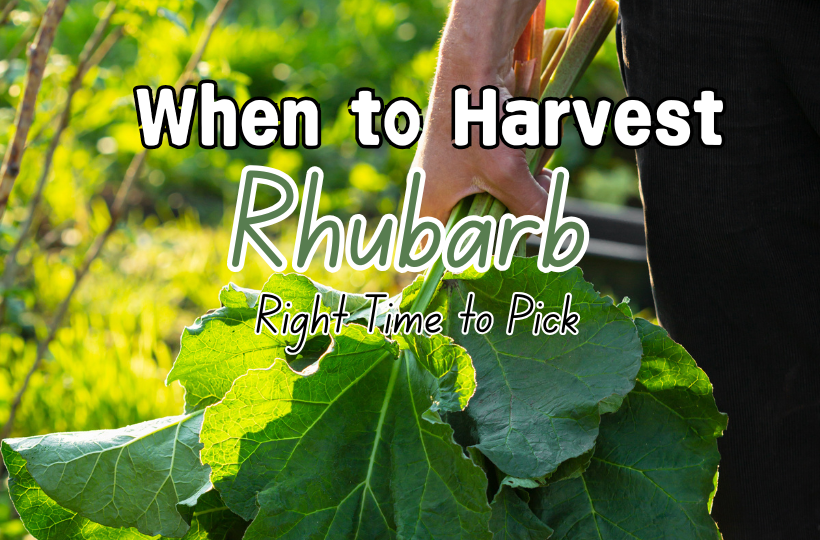

This guide will help you identify the perfect timing for harvesting your rhubarb, covering key signs to look for and tips for getting the most out of your plants.
When to Harvest Rhubarb

Rhubarb is typically ready to harvest in spring and early summer, depending on your climate. In most regions, the harvesting period begins in April or May and continues until June or July. In cooler climates, such as the northern U.S., the harvesting window may extend longer, but it’s important to know when to stop picking to ensure the plant’s health.
Here are the key indicators that your rhubarb is ready for harvesting:
- Stalk Length: Harvest rhubarb when the stalks are 10-15 inches long. Shorter stalks indicate that the plant is still immature and should be left to grow.
- Stalk Thickness: Thick, firm stalks are ideal. Thin, spindly stalks can be an indicator that the plant needs more time to develop or that it’s under stress.
- Color: While the color of the rhubarb stalks can range from green to deep red, color is not always the best indicator of ripeness. Some varieties naturally produce green stalks, even when they’re fully mature.
For healthy stalks and easy harvesting, it’s recommended to use a sharp pruning knife or garden shears to cleanly cut the stalks. [Get it Here].
How Do You Know When to Harvest Rhubarb?

The most important sign that rhubarb is ready for harvest is the size of the stalks. As mentioned, once they reach around 10-15 inches in length and feel firm to the touch, they are ready. Here are some additional tips for determining if your rhubarb is mature enough:
- Check the Time: Rhubarb plants take about 2-3 years to become fully established. Avoid heavy harvesting during the first couple of years to allow the plant to develop a strong root system.
- Look for New Growth: Rhubarb grows rapidly in the spring. If you see new stalks emerging while older ones have matured, it’s a good time to start harvesting.
- Healthy Leaves: Even though the leaves are inedible, healthy, full leaves are a sign that the plant is doing well. However, only the stalks should be harvested.
How to Harvest Rhubarb

Harvesting rhubarb is a simple process, but care should be taken to avoid damaging the plant. Here’s how to properly harvest your rhubarb:
- Select Mature Stalks: Choose stalks that are at least 10 inches long. Leave smaller stalks behind to continue growing.
- Pull, Don’t Cut: It’s best to pull the stalks rather than cutting them. Grasp the stalk near the base and gently pull it away from the plant with a twisting motion. If necessary, you can use a knife to cut the stalk cleanly at the base.
- Leave the Leaves: Immediately remove the leaves, as they are toxic to humans and animals. Compost the leaves or discard them.
- Don’t Overharvest: Never harvest more than one-third of the plant’s stalks at a time, as this can weaken the plant.
To avoid damaging your plant, consider using a high-quality garden knife designed specifically for harvesting vegetables. [Get it Here].
When to Stop Picking Rhubarb

It’s essential to know when to stop harvesting rhubarb to allow the plant to recover for the following season. Here’s when you should stop picking rhubarb:
- By Mid-Summer: Typically, you should stop harvesting rhubarb by July in most regions. After this point, the plant needs to conserve energy for next year’s growth.
- Thin Stalks: If you notice the stalks becoming thinner and more spindly, this is a sign that the plant needs a break. Stop harvesting and allow it to rest.
- Heat Stress: In hot climates, rhubarb may struggle during the height of summer. If your rhubarb starts to wilt or struggle, stop harvesting to avoid over-stressing the plant.
Can I Harvest Rhubarb in August or September?

While rhubarb is generally harvested in the spring and early summer, there are situations where you might still be able to harvest later in the year:
- Cool Climates: In cooler regions, like the northern U.S. or Canada, some gardeners may be able to harvest rhubarb as late as August or September if the plant is still producing healthy stalks.
- Late Growth: If new stalks emerge in late summer, you can harvest them as long as they reach maturity. However, it’s important not to overharvest at this time, as the plant needs energy to survive the winter.
In most cases, it’s best to stop harvesting by mid-summer to allow the plant to recover.
Does Rhubarb Die Back in Winter?

Yes, rhubarb naturally dies back in winter. As a perennial plant, rhubarb enters dormancy during the colder months. The leaves will wither, and the stalks will die back to the ground. This is normal and essential for the plant’s survival, as it helps conserve energy for the next growing season.
During the winter:
- Mulch the crown of the plant to protect it from freezing temperatures.
- In the spring, remove the mulch to encourage new growth.
What to Do With First-Year Rhubarb

Rhubarb plants should not be heavily harvested during their first year of growth. Here’s what you should do with first-year rhubarb:
- Let It Grow: Allow the plant to establish a strong root system by leaving most of the stalks intact. If you must harvest, only take a few stalks and avoid overharvesting.
- Water and Mulch: Ensure the plant receives consistent watering and mulch around the base to retain moisture and regulate temperature.
By the second or third year, your rhubarb will be mature enough for full harvesting.
Is Rhubarb Ripe When Green?

Rhubarb stalks can be ripe when they are green or red, depending on the variety. Red stalks are often sweeter and more tender, but many green varieties are just as delicious. Color alone is not an indicator of ripeness. Instead, focus on stalk length (10-15 inches) and firmness to determine maturity.
How to Grow Thick Rhubarb Stalks

To grow thick, healthy rhubarb stalks, follow these tips:
- Soil Quality: Plant rhubarb in rich, well-draining soil with plenty of organic matter.
- Fertilize: Apply a balanced fertilizer or compost in early spring to promote strong growth.
- Watering: Rhubarb needs consistent moisture but should not sit in waterlogged soil. Mulch around the base to retain moisture.
- Thinning: If your rhubarb is producing many thin stalks, consider thinning the plant by removing a few stalks to encourage thicker growth.
Growing Rhubarb in Pots

Rhubarb can be grown in pots, though it requires a large container to accommodate its deep roots. Here’s how to grow rhubarb in pots:
- Container Size: Choose a pot that’s at least 20 inches wide and 20 inches deep.
- Soil: Use well-draining, fertile soil with plenty of organic matter.
- Watering: Ensure the pot has good drainage, and water regularly to keep the soil moist but not waterlogged.
- Winter Care: In colder regions, bring the pot indoors or mulch heavily to protect the roots during winter.
For the best results, use a high-quality planter that allows plenty of room for rhubarb to grow. [Get it Here].
When to Harvest Rhubarb in Different States

When to Harvest Rhubarb in Ohio
In Ohio, rhubarb is typically ready for harvest in May and can continue through June. Stop harvesting by early July to allow the plant to rest for the following year.
When to Harvest Rhubarb in Michigan
In Michigan, rhubarb is usually harvested from May to July. The cooler climate allows for a slightly longer harvesting period, but be sure to stop by mid-summer.
When to Harvest Rhubarb in Wisconsin
In Wisconsin, rhubarb can be harvested from May to June, with an ideal window in early summer. The plant will go dormant in the fall.
When to Harvest Rhubarb in Minnesota
Minnesota offers a cool climate perfect for rhubarb, with harvesting usually happening in May and June. In some cases, harvesting can extend into July.
When to Harvest Rhubarb in Oregon
In Oregon, rhubarb is often harvested from April to June, thanks to the moderate climate. The longer growing season can sometimes extend into July.
Understanding Rhubarb Growth
Rhubarb is a perennial vegetable that thrives in cooler climates. The edible part of the plant is the stalk, while the leaves contain oxalic acid and are toxic to consume. Rhubarb needs a cold winter dormancy period to produce strong, healthy stalks in the spring.
It’s essential to allow rhubarb to establish itself in the first year or two of growth before you begin harvesting. Once it’s mature, rhubarb can provide a consistent crop for up to 10-15 years if properly cared for.